
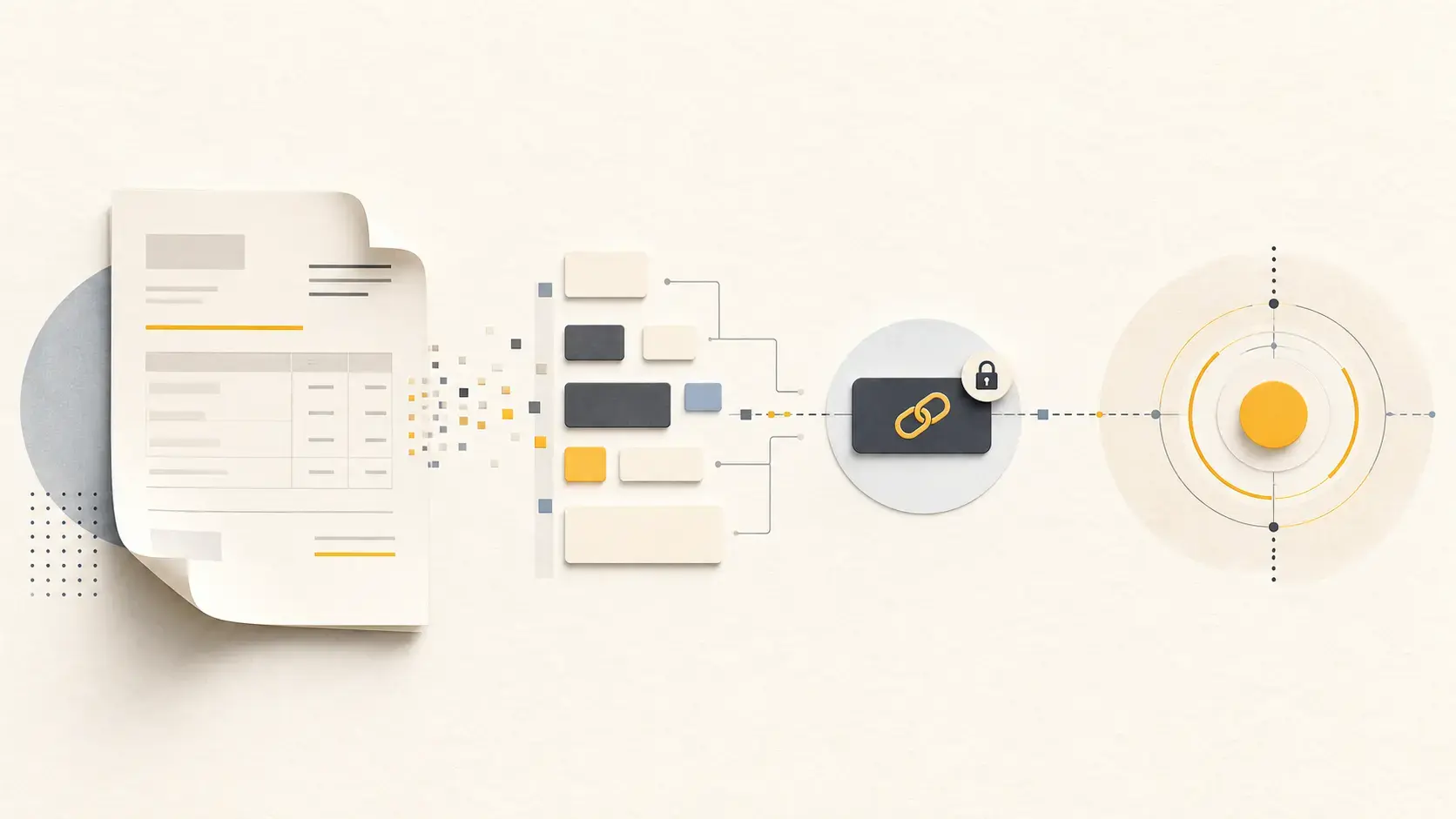
The most important invoicing trends are not new PDF colors or an AI button. They are changes to the document’s role. In more markets, an invoice is becoming structured data that must move between systems, support tax reporting, and reconcile to a near-real-time payment event.
Here are seven changes worth planning for as of July 2026, with a clear distinction between industry direction and what Invoice Master supports today.
1. A PDF is no longer always the invoice
A PDF is readable and useful for records, but structured e-invoicing networks exchange machine-readable documents with defined fields and validation. OpenPeppol describes Peppol as an interoperability framework for standardized documents such as eOrders and eInvoices—not as a PDF portal or a single software provider.
Preparation: Ask major customers and public-sector buyers which format, network, identifier, and service provider they require. Do not assume that emailing a PDF satisfies a structured e-invoice mandate.
Invoice Master currently produces PDFs and web views; it does not transmit a Peppol or country-specific structured e-invoice.
2. Tax reporting is moving closer to the transaction
The EU’s VAT in the Digital Age package received final Council approval in March 2025. The Council timeline says cross-border B2B VAT reporting obligations are to be fully digitalized by 2030. Individual countries also have their own schedules and systems.
Preparation: Keep legal identities, tax identifiers, line-level tax data, issue dates, currencies, and correction histories structured and consistent. Monitor the tax authority for every jurisdiction in which you invoice.
3. Payment expectations are getting faster
Instant-payment infrastructure is expanding. The US Federal Reserve says FedNow supports real-time, around-the-clock payments through participating financial institutions, and reported more than 1,500 participating institutions by the end of 2025. Availability to a particular business still depends on its bank and service provider.
Preparation: Preserve a unique invoice reference and clear remittance data even when funds arrive instantly. Faster settlement without good identifiers can make reconciliation faster only in theory.
4. Checkout is moving into the invoice journey
Hosted invoice payment pages reduce the distance between approval and payment. They also divide responsibility: the invoicing system supplies document context, while the processor controls method eligibility, authentication, settlement, fees, refunds, and disputes.
Invoice Master’s Premium Stripe integration follows that model. It creates a Stripe-hosted payment link from invoice data and records a successful payment event. Refunds and chargebacks still require a matching manual entry in Invoice Master.
5. Audit trails matter more than status labels
“Paid” is a conclusion. A defensible record includes the source invoice, version or correction history, payment date, amount, method, processor reference, refunds, chargebacks, and communication around disputes. Structured reporting makes inconsistencies more visible, not less.
Preparation: Define who may issue, cancel, adjust, and export documents. Test what survives an organization export and which attachments or external processor records must be retained separately.
6. AI will assist review before it deserves autonomy
AI can help classify expenses, suggest descriptions, detect unusual totals, or summarize collection history. Those are useful review aids. Fully autonomous tax decisions, bank-detail changes, or collection escalation carry a much higher error and fraud cost.
Preparation: Require source evidence, human approval, a visible change log, and a reversible action for any AI-assisted financial workflow. Do not measure success by the number of generated words or automated decisions.
Invoice Master does not currently promise AI bookkeeping, tax determination, or autonomous invoice approval.
7. Portability becomes a buying criterion
As billing records spread across client portals, payment processors, tax networks, and internal systems, businesses need exports that preserve both human-readable documents and machine-readable relationships. A stack is only replaceable if you can retrieve the data and understand the export.
Invoice Master supports invoice and quote PDFs, selected ZIP downloads, Premium report CSV/PDF exports, and a full organization archive in JSON for export/import. The data export format and restore article explains what each output preserves. Attachment records can exist in the archive without making every stored file binary portable, so retain critical files separately.
A practical 2026 readiness list
- Identify customers that require structured e-invoices rather than PDFs.
- Track government implementation dates from primary tax authorities.
- Keep customer, tax, currency, and invoice-reference data clean.
- Reconcile gross payment, fees, refunds, and net payout separately.
- Require review and auditability for AI-assisted actions.
- Test exports before you need to migrate or answer an audit.
The future is less about an invoice looking digital and more about the record being interoperable, verifiable, and easy to settle.