
Quote-to-invoice conversion in Invoice Master is a prefilled draft, not an irreversible automation. The action opens the new-invoice form with selected quote data so you can review, change, and save the invoice.
That is more precise than “one click creates a ready-to-pay invoice.” Delivery and payment setup still happen after review.
Product check, July 12, 2026: The current frontend performs the conversion handoff. It does not merge multiple quotes or create a permanent conversion link between the saved records.
What is prefilled
The conversion action carries the quote’s:
- sender and recipient details;
- linked contact and company identifiers;
- linked project identifier;
- document currency; and
- line items.
Those are the fields most likely to cause retyping errors. The result is navigation data for a new invoice form, not a saved invoice until you submit it.
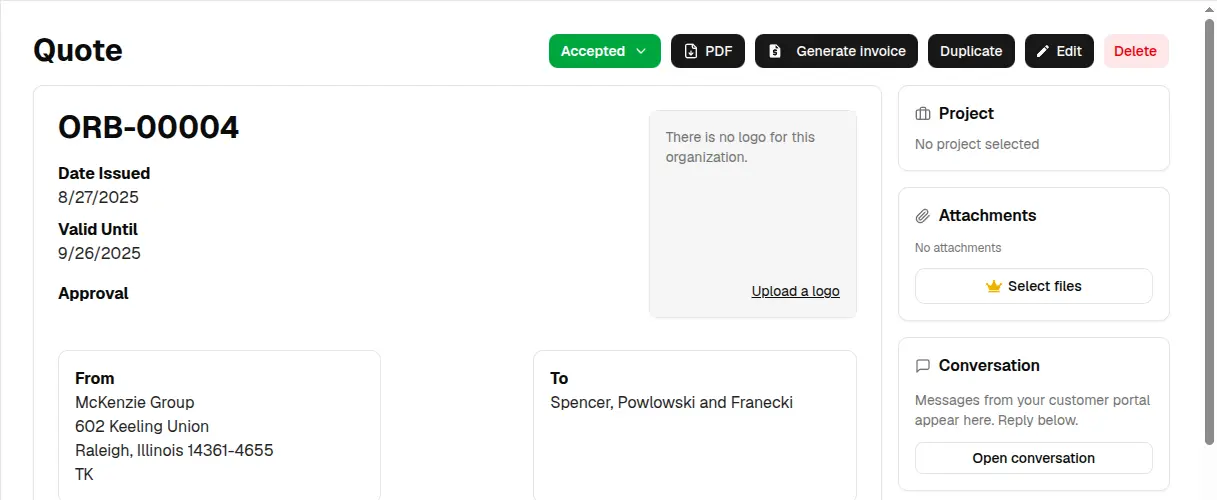
Seeded demo quote, captured July 12, 2026. The action opens a new invoice draft; it does not issue or send one.
What does not automatically carry over
Do not assume the invoice inherits the quote’s title, description, footnotes, private notes, attachments, email history, access link, portal conversation, status history, issue or validity dates, or quote number. It also does not automatically create a Stripe payment link or email the customer.
The quote remains its own commercial record. The new-invoice form suggests its own number and issue and due dates; the user can replace or reuse the number because Invoice Master permits duplicates.
Acceptance is a separate event
Quotes can move through draft, sent, accepted, rejected, and expired statuses. An invited client-portal user can accept or reject a quote. A public read-only quote link does not provide an e-signature, and Invoice Master is not an e-signature platform.
Keep the acceptance evidence appropriate to the risk: portal event, signed contract, purchase order, or explicit written approval. Then use conversion as an administrative handoff. Do not imply that opening or downloading the quote proves consent.
Review the commercial differences
Before saving the invoice, ask:
- Was the entire quoted scope delivered, or only a milestone?
- Did quantities, time, expenses, or tax change?
- Is a deposit already paid and represented correctly?
- Does the customer require a new purchase order or billing contact?
- Should the invoice describe an actual service period rather than the proposed scope?
- Are currency and line-item tax still correct?
- What issue date, due date, and payment terms now apply?
If only part of the quote is billable, remove or adjust lines in the draft. The conversion does not maintain a “remaining quoted amount” ledger, so track staged billing deliberately.
Finish the invoice workflow
After reviewing the draft, use the pre-send invoice audit before delivery:
- add the correct purchase-order and custom references;
- write invoice-specific notes and payment instructions;
- preview the PDF or public page;
- save the invoice;
- create a Stripe-hosted payment link if the organization has Premium and the amount is final; and
- deliver it by Invoice Master email, public link, portal, PDF, or the customer’s required procurement channel.
Premium email and payment links are separate features. Conversion does not make a Basic invoice payable online, bypass plan limits, or carry an old payment route into a new document.
Local draft recovery can affect the form
The new-invoice form also supports browser-local draft recovery. Conversion navigation data is intended to prefill the quote values; do not rely on an older unsent invoice draft remaining untouched when you start the handoff. If the existing draft matters, save or finish it before converting another quote.
The useful promise
Quote conversion reduces duplicate entry for the parties, related records, currency, and lines. It does not remove the accounting and commercial distinction between an offer and a demand for payment. That distinction is exactly why the final review belongs in the workflow.